




By using our website, you agree to the use of cookies as described in our Cookie Policy
What Causes White Mineral Buildup on Boat Fixtures?
Most boat owners see that crusty white film on their fixtures and assume it's just part of life on the water. Annoying, sure, but harmless. Wrong. That buildup isn't just cosmetic—it's a slow-burning problem that can choke out your plumbing, corrode metal fittings, and cost you serious money if you let it ride. The minerals don't just sit there. They dig in, they spread, and they make everything harder to fix down the line.
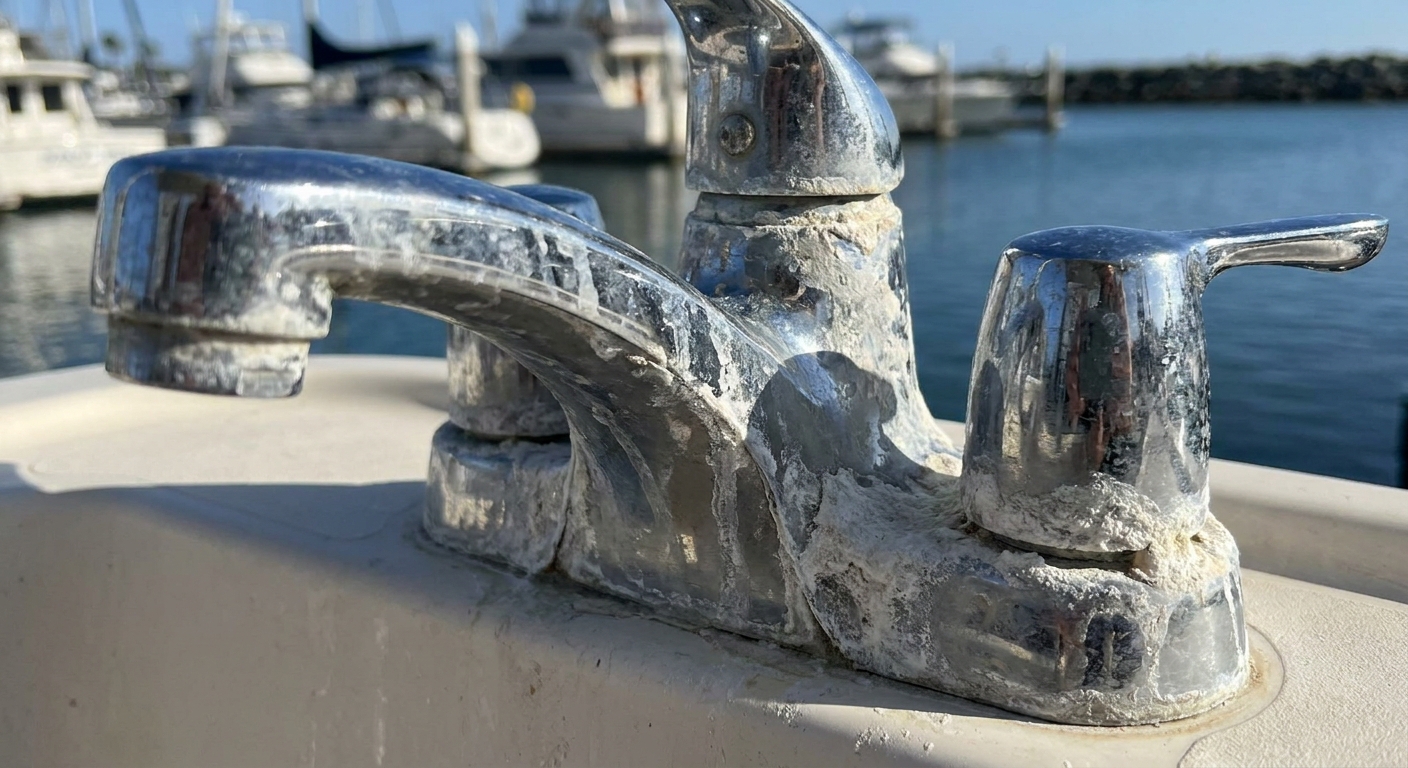
So here's what you need to know. That white crust comes from dissolved minerals in the water—calcium, magnesium, and a handful of other compounds that get left behind when water evaporates. Freshwater or saltwater, doesn't matter. If the water touches your fixtures and dries, you're getting deposits. The question isn't whether it'll happen. It's how fast, and whether you're doing anything to slow it down.
Hard Water Leaves More Than a Film
If your boat pulls water from a marina or dock supply, chances are you're dealing with hard water. That means elevated levels of calcium and magnesium dissolved right into the stream. Every time water hits your faucet, showerhead, or deck fitting and evaporates, those minerals stay put. Layer after layer, splash after splash, until you've got a chalky mess that doesn't wipe away with a rag.
This isn't just a surface problem. Hard water doesn't stop at what you can see. It builds up inside pipes, valves, and pump housings. Over time, that restricts flow, clogs aerators, and puts stress on your water system. We've seen boats lose water pressure entirely because the buildup narrowed the line to a pinhole. And by then, you're not cleaning—you're replacing.
Saltwater Compounds the Damage
Saltwater boats get hit twice as hard. You've got sodium chloride—the salt itself—drying on every surface. But you've also got trace minerals, sulfates, and other compounds that crystallize when the water evaporates. Those deposits mix with any freshwater minerals already present, creating a stubborn, multilayered crust that standard cleaners barely touch.
What makes it worse is that saltwater accelerates corrosion. The buildup isn't just sitting there—it's trapping moisture against metal surfaces, creating the perfect environment for oxidation. That white residue you're seeing? It's often the early warning sign of something deeper eating away at your hardware.
Galvanic Corrosion Adds Another Layer
When you've got dissimilar metals on your boat—and most boats do—you're dealing with more than just mineral deposits. Galvanic corrosion kicks in when those metals are submerged or splashed with saltwater. An electrical current flows between them, breaking down the less noble metal and producing oxides and other compounds that show up as white or gray deposits.
This process doesn't just look like mineral buildup—it often sits right alongside it. The corrosion weakens fittings, creates pitting, and makes the surface even more receptive to mineral adhesion. It's a feedback loop. The more corroded the surface, the easier it is for minerals to cling. The more minerals that cling, the more moisture gets trapped. And the cycle keeps running.
Heat and Sun Speed Everything Up
Boats bake in the sun. That's just the reality of being on the water. But when direct sunlight hits wet fixtures, evaporation happens fast—and that means minerals get left behind fast too. High temperatures accelerate the whole process, turning what might be a slow buildup into a stubborn crust in a matter of weeks.
Areas with constant splashing are the worst offenders. Faucets, deck showers, transom fittings—anywhere water repeatedly lands and dries. If those spots also sit in full sun, you're looking at a buildup that hardens into something closer to concrete than chalk. And once it sets, it's not coming off without a fight.
Your Water System Feeds the Problem
If your boat's plumbing doesn't include filtration or water softening, every gallon you run through the system is carrying minerals with it. Those minerals don't just pass through—they settle. Inside hoses, around valve seats, in pump chambers, and on fixture threads. Over time, that internal buildup restricts flow, creates leaks, and forces components to work harder than they should.
We've pulled apart water heaters and found them caked with mineral scale so thick the heating element was nearly buried. The system still ran, technically. But it was working at a fraction of its capacity, burning more power and delivering lukewarm water at best. That's not a failure you see coming. It's one you notice when it's already too late to avoid the expense.
What Actually Stops It
You can't eliminate mineral buildup entirely, but you can control it. The key is limiting exposure and cleaning before deposits harden. Rinse your fixtures with fresh water after every saltwater outing. Dry them down if you've got the time. Install a water softener or inline filter if hard water is your main enemy. And clean regularly with something acidic—vinegar works, so do purpose-built descalers.
Here's what makes the biggest difference:
- Rinse fixtures thoroughly with fresh water after exposure to salt or mineral-heavy water
- Wipe down and dry surfaces to prevent evaporation and residue formation
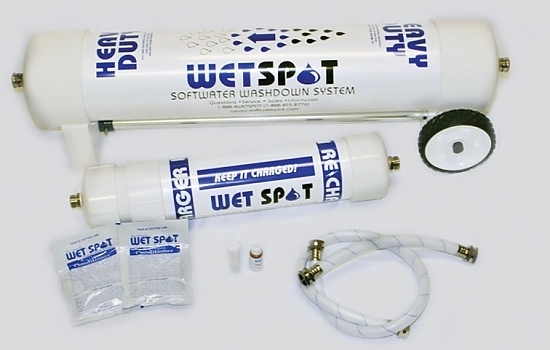
- Use water softeners or filtration systems to reduce mineral content at the source
- Clean fixtures monthly with mild acidic solutions to dissolve early-stage deposits
- Inspect plumbing lines and valves annually for internal scale buildup
When to Replace Instead of Clean
Sometimes the buildup wins. If fixtures are corroded underneath the mineral layer, or if internal components are so scaled over that they no longer function properly, cleaning won't save them. You'll need to replace the part and start fresh. That's not a failure—it's just maintenance. The real mistake is ignoring the warning signs until a small problem becomes a system-wide overhaul.
Here's when replacement makes more sense than restoration:
- Fixtures show deep pitting or corrosion beneath the mineral layer
- Water flow is severely restricted even after descaling efforts
- Threads are damaged or fittings no longer seal properly
- Internal pump or valve components are heavily scaled and no longer functional
- Stainless or chrome finishes are permanently stained or flaking
Documentation Saves Time Later
If you're running a charter, managing a fleet, or just keeping detailed records, document your cleaning and replacement schedule. Take photos of problem areas before and after maintenance. Note which fixtures fail first, and which products actually work. That information becomes your playbook for the next season—and it's invaluable if you ever need to make a warranty claim or justify an insurance expense.
Here's what to track:
- Dates and methods used for cleaning each fixture
- Products or solutions that effectively removed buildup
- Fixtures that required replacement and the reason why
- Water quality reports if available from your marina or dock
- Photos showing progression of buildup or corrosion over time
Small Habits Prevent Big Bills
Most boaters think of maintenance as something you do when something breaks. But with mineral buildup, the best approach is the one that stops it from becoming a problem in the first place. A quick rinse after every outing, a monthly wipe-down with vinegar, and an annual inspection of your water system—those aren't complicated tasks. But they're the difference between fixtures that last a decade and fixtures that fail in three years.
Here's the routine that works:
- Rinse all exposed fixtures with fresh water immediately after docking
- Perform a detailed cleaning of high-exposure areas once a month
- Run fresh water through the entire plumbing system periodically to flush internal deposits
- Check sacrificial anodes and replace them before they're fully depleted
- Inspect hidden areas like bilge fittings and thru-hulls for early signs of buildup or corrosion
Prevention Beats Replacement Every Time
White mineral buildup isn't a mystery. It's predictable, preventable, and manageable—if you treat it like the maintenance issue it is. The minerals are always there. The evaporation is always happening. But whether that turns into a cosmetic nuisance or a system-wide breakdown depends entirely on how you respond. Stay ahead of it, and your fixtures will outlast your boat. Ignore it, and you'll be swapping out hardware every few seasons wondering why nothing lasts. The water doesn't care. The minerals don't care. But your wallet will.
We've worked with enough boat owners to know that the ones who treat mineral buildup seriously are the ones who aren't constantly buying new faucets, pumps, and fittings. They're the ones whose boats look sharp, run clean, and hold their value. That's not luck. It's discipline. And it starts with understanding what you're up against—and refusing to let it win. If you need replacement parts for corroded fixtures, professional marine services can help assess your system's condition. For boats requiring comprehensive maintenance, explore our inventory options or request a quote for repairs. Learn more about our expertise in marine systems, or reach out through our contact page to discuss your specific needs.
Let’s Keep Your Boat in Top Shape
Staying ahead of mineral buildup is all about smart habits and timely action. We’re here to help you protect your boat’s fixtures and plumbing so you can spend more time enjoying the water and less time worrying about repairs. If you’re ready for expert advice or hands-on service, contact us today to get started on a maintenance plan that works for you.
‹ Back
Recent Posts
-
What Causes White Mineral Buildup on Boat Fixtures?
July 10, 2026
-

-
-
-
Is Hard Water on Your RV Leaving White Stains Behind?
April 24, 2026